
AI Prompt for Academic Research
Writing academic papers, essays, or research proposals requires finding very specific, trustworthy information and structuring arguments logically.
If you simply ask an AI, “Tell me about climate change,” you’ll get a general, vague summary that isn’t useful for a university paper. To get the specific data, sources, and structured arguments needed for academic success, you must use a precise, constrained instruction (a prompt).
ChatQuick is the tool that gives you the perfect plan to write that instruction, allowing you to generate focused, high-quality research outlines and summaries from any AI tool.
In this article, we will show you the easy, four-step plan to use ChatQuick to create perfect academic research prompts every time. Let’s dive in.
Introducing ChatQuick: Your Prompt Blueprint Tool
ChatQuick is not an AI that writes your final content; instead, it is a specialized prompt generator designed to create the perfect instructions for other AI models. Its key feature is its Prompt Library, which is filled with expert-level templates for specific tasks like generating research outlines, structuring literature reviews, or analyzing complex data.
This tool ensures that your prompts always include essential elements like a specific Role (e.g., “Act as a PhD researcher”), clear constraints (e.g., citation style or source requirements), and the necessary academic structure.
By giving the AI a blueprint, ChatQuick guarantees that your output is professional, focused, and immediately useful, saving you time and effort on general searches. In this article, we will show you the easy, four-step plan to use ChatQuick to create perfect academic research prompts every time.
What Makes a Great Academic Prompt?
- The success of your AI-assisted research depends entirely on the instructions you give the AI. A perfect academic prompt must cover four key areas:
- Role & Source Constraint (The Authority): The prompt must tell the AI what persona to adopt (e.g., a statistician, historian, or ethical philosopher) and specify that it should base its response only on peer-reviewed sources or highly credible institutions.
- Scope & Depth (The Focus): You must define the exact time frame, geographic area, or specific theory the research must cover, ensuring the answer is narrow and deep, not broad and shallow.
- Output Structure (The Format): Academic work requires specific formats. The prompt must demand the output be structured using specific headings, bullet points, or even a full APA or MLA outline.
- Tone & Level (The Language): The prompt must set the required complexity, whether it’s simple enough for an undergraduate introduction or complex enough for a postgraduate literature review.
ChatQuick organizes all these complex needs into one clear, powerful command.
How to Generate Prompt for academic research: ChatQuick
Follow this easy, four-step plan to create professional, highly constrained academic research prompts using ChatQuick’s prompt generation power.
1. Log In and Find the Right Blueprint
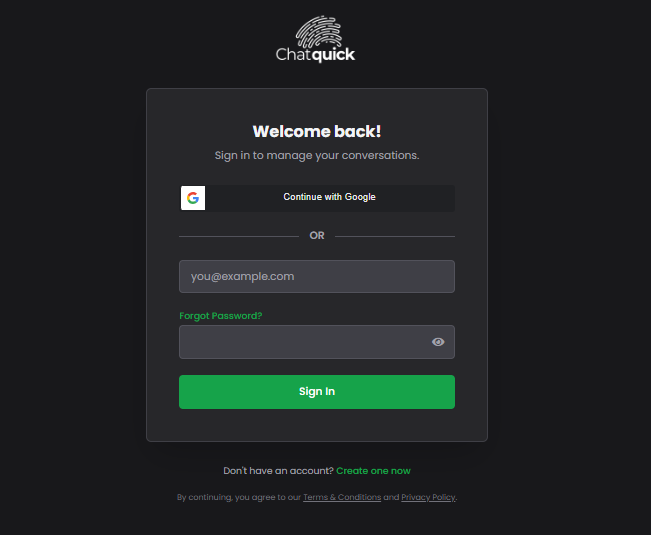
First, go to the ChatQuick website and sign in. Go straight to the Prompt Library. Search for “Academic Research Outline,”
2. Test and Copy the Master Prompt
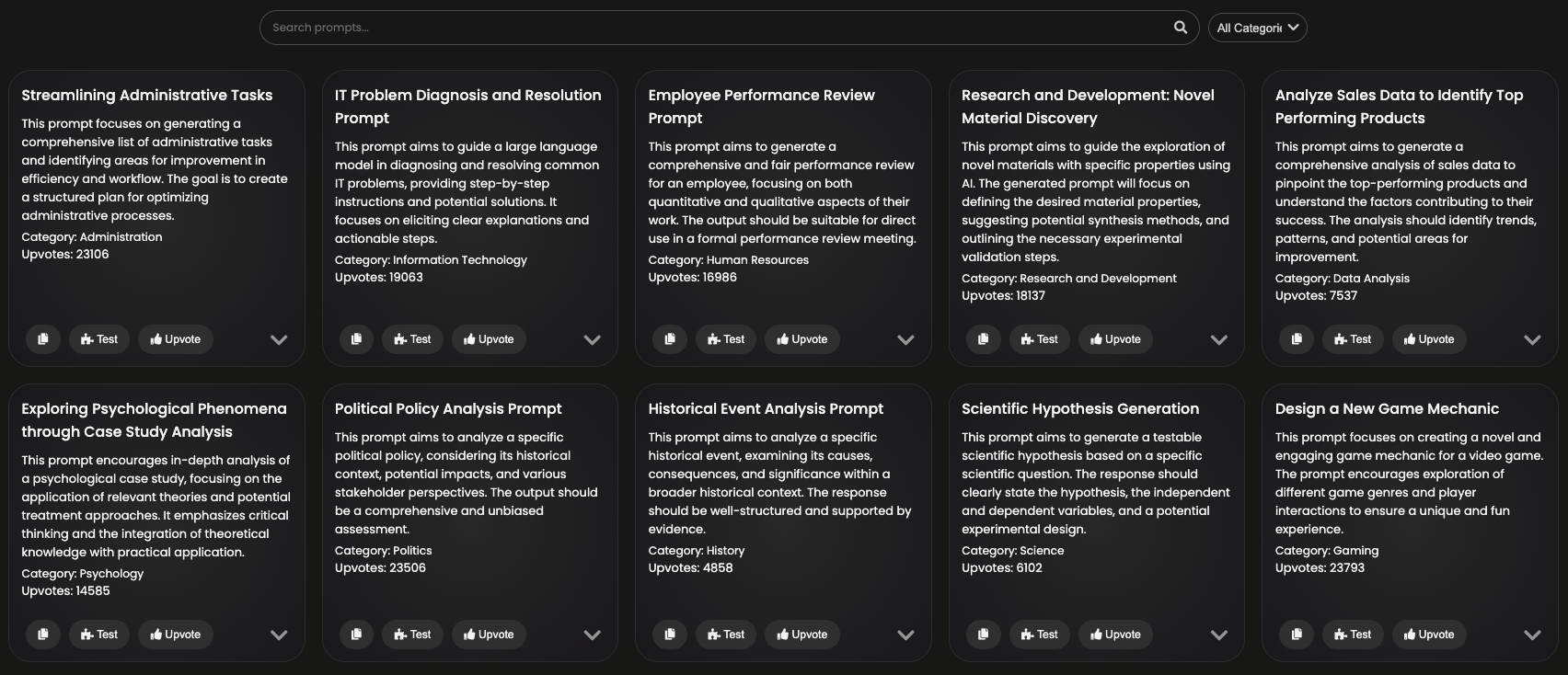
Find the special academic research template. Click the “Test” button to load the entire template into your screen. Copy this whole instruction plan to your clipboard.
3. Change the Template to Fit Your Project
The copied Master Prompt will have blank spaces you need to fill. Before you run it, you must add your specific research question, required sources, desired citation style, and the target length into those spaces.
Here is an example of a Master Prompt created by ChatQuick, filled in with details for a specific research project:
The ChatQuick-Generated Prompt (Ready to Use)
ROLE & GOAL
Act As: You are an expert academic research assistant with specialized knowledge in [Specify Field, e.g., "Quantum Physics," "18th-Century British Literature," "Machine Learning Ethics"].
Primary Objective: To conduct a comprehensive literature review and synthesize key findings on the topic of "[Insert Specific Research Topic]".Audience: The output is for an academic researcher preparing a [Specify Document Type, e.g., "doctoral dissertation," "peer-reviewed journal article," "conference paper"].
Output Format: A structured report formatted in Markdown, including sections for Introduction, Key Themes, Methodological Approaches, Gaps in Research, and a Synthesized Bibliography.

CONTEXT & SCOPE
Core Research Question: [State the primary research question clearly, e.g., "What is the impact of socio-economic status on student academic achievement in urban secondary schools over the last decade?"]
Keywords & Search Terms: [List primary and secondary keywords, e.g., "socio-economic status," "academic achievement," "urban schools," "educational inequality," "student outcomes," "secondary education"].
Timeframe: Focus on literature published between [Start Year] and [End Year].
Geographical Focus: [Specify region, e.g., "North America," "Europe," "Global," "N/A"].
Exclude: Do not include [Specify exclusions, e.g., "opinion pieces," "non-peer-reviewed articles," "studies focused on primary education"].

DETAILED INSTRUCTIONS & TASKS

Task 1: Literature Search & Filtering
    *   Simulate a search across academic databases (e.g., Google Scholar, JSTOR, PubMed, Scopus).
    *   Identify the 20-30 most seminal and recent papers relevant to the core research question.
    *   Prioritize sources based on citation count, journal impact factor, and relevance.

Task 2: Thematic Synthesis
    *   Analyze the collected literature and identify 3-5 major recurring themes or debates.
    *   For each theme, provide a concise summary, citing the key authors and their main arguments.
    *   Note any conflicting findings or divergent perspectives within each theme.

Task 3: Methodological Review
    *   Categorize the research methodologies used in the analyzed papers (e.g., "Quantitative," "Qualitative," "Mixed-Methods," "Theoretical").
    *   Summarize the dominant research designs and data collection techniques.
    *   Highlight any innovative or noteworthy methodological approaches.

Task 4: Identification of Research Gaps
    *   Based on your analysis, identify and articulate specific gaps in the current body of literature.
    *   Suggest potential future research directions or unanswered questions that emerge from these gaps. This is the most critical part of the analysis.

Task 5: Synthesized Bibliography
    *   Compile a bibliography of all cited sources.
    *   Format the citations according to [Specify Citation Style, e.g., "APA 7th Edition," "MLA 9th Edition," "Chicago"].

CONSTRAINTS & QUALITY CONTROL
Tone: Maintain a formal, neutral, and objective academic tone.
Citations: All claims, summaries, and arguments must be attributed to the appropriate source(s).
Structure: Adhere strictly to the requested Markdown format with clear headings for each section.
Language: English.
Verification: For each major finding, cross-reference it with at least two sources if possible to ensure validity.
Step 4: Run the Prompt in Your AI Tool of Choice
Now, take the exact, structured text created by ChatQuick and paste it into the AI tool you like (like Gemini, ChatGPT, or others). Because the prompt gives the AI a clear job (Analyst), constrains the data (2020-2024), and demands a specific format (H2 headings, in-text citations), the AI will create a highly focused and academically useful response.
Conclusion
Conducting strong academic research requires precision, credibility, and a clear structure. Generative AI is the fastest way to compile and structure information, but only when given professional-level direction.
By using ChatQuick as your prompt generation tool, you stop getting shallow summaries and make sure every research inquiry is targeted, evidence-based, and formatted for academic review.
Stop wasting time with weak prompts; use ChatQuick to design your next successful research prompt today.
